

Let’s be real for a second: watching your daughter struggle with depression is gut-wrenching. It’s not just "teen angst" or a "moody phase." It’s like watching a bright, vibrant person get swallowed by a thick, heavy fog that won’t lift. You’ve tried the heart-to-hearts, the school counselor, and maybe even the weekly therapy sessions, but the light in her eyes still feels a million miles away.
If you’re feeling exhausted, scared, or even a little bit guilty, take a deep breath. You’re doing the best you can with a situation that didn’t come with an instruction manual. Sometimes, the fog is just too thick for a one-hour-a-week session to cut through. That’s where residential treatment for teen depression comes in.
At Compassion Care Group, we believe that every girl has a spark that can’t be extinguished, it just needs the right environment to catch fire again. We’re not here to "fix" her; we’re here to walk alongside her as she finds her own way back to the light.
What Exactly is a Youth Residential Treatment Center?
If the term "residential treatment" makes you think of cold, sterile hospital hallways or those old-school movies about "troubled" youth, let us clear that up right now. A modern youth residential treatment center is much more like a therapeutic home than a medical facility.
Unlike a psychiatric hospital (which is usually for short-term crisis stabilization) or a therapeutic boarding school (which focuses heavily on academics), a behavioral health residential program is designed specifically for healing. It is a structured, immersive environment where your daughter can focus 100% on herself without the distractions of social media, school drama, or the pressure to "be okay" for her family.

A teenage girl sitting comfortably in a warm, sunlit room, looking thoughtfully out a window with a faint, hopeful smile.
In this setting, the focus is on attention, encouragement, and holistic well-being. She isn’t just a patient; she’s a person who needs a safe space to decompress and rebuild. Think of it as a hard reboot for her mental health, provided by a team that understands exactly what she’s going through.
Why Residential Care Works When Other Things Don’t
We often talk to parents who feel like they’ve failed because outpatient therapy didn't "solve" the depression. Please, stop that thought right there. Outpatient therapy is great, but depression, especially the kind that leads to isolation, self-harm, or total academic shutdown, is a 24/7 battle. It’s hard to win a 24/7 battle when you’re only getting professional support for 50 minutes a week.
Residential treatment for teens works because it provides:
- Safety and Structure: Depression thrives in chaos and isolation. Our compassionate therapeutic environment provides a predictable rhythm to the day that helps regulate her nervous system.
- Immediate Support: When she has a "dark moment" at 2:00 AM, there is a trained professional there to talk her through it. She doesn't have to wait until next Tuesday to process a breakthrough or a breakdown.
- A Peer Community: Depression makes girls feel like they are the only ones on the planet feeling this way. In a residential program, she meets other girls who truly "get it." That connection is often the first step toward healing.
The Ingredients of Healing: What Happens Inside
A high-quality mental health residential treatment for adolescents isn't just about sitting on a couch and talking about feelings (though there is plenty of that). It’s a multi-layered approach that addresses the mind, body, and spirit. We focus on self-discovery, resilience, and empowerment.
Evidence-Based Therapies
We use what works. This includes things like Cognitive Behavioral Therapy (CBT) to help her challenge those "nasty" depressive thoughts, and Dialectical Behavior Therapy (DBT) to give her actual, tangible skills to manage big emotions without spiraling.
Trauma-Informed Care
Often, depression is a shell protecting a deeper wound. Trauma informed residential care means we don't ask "What’s wrong with you?" but rather "What happened to you?" By understanding the root causes, we can help her heal the foundation, not just paint over the cracks.
Life Skills and Joy
Healing isn't all heavy lifting. It’s also about rediscovering joy. Whether it's through art, movement, or learning how to cook a decent meal, we help her reconnect with the things that make life worth living. We believe in providing a safe learning environment where she can try, fail, and try again without judgment.

Two teenage girls laughing together while painting on canvases in a bright, creative studio space.
The Parent’s Role: You’re Not "Sending Her Away"
One of the hardest hurdles for parents is the feeling that they are "sending their daughter away." We like to reframe that: you are sending her toward help. You are giving her the professional resources she needs to survive and thrive.
At Compassion Care Group, we believe family involvement is non-negotiable. Depression doesn't happen in a vacuum, and neither does recovery. Our service delivery includes regular family therapy sessions, parent coaching, and consistent updates. You are an essential part of the treatment team. While she is working on her growth, we’ll be helping you build a roadmap for when she comes home.
How to Know if It’s Time for a Teen Residential Treatment Center
It’s a big decision, and it’s okay to feel hesitant. However, there are usually some clear signs that a higher level of care is needed:
- Safety Concerns: If there have been mentions of self-harm or suicidal ideation, a 24/7 supervised environment is often the safest choice.
- Total Withdrawal: She’s stopped hanging out with friends, stopped doing hobbies she loved, and is essentially living in her room.
- School Failure: Her grades have tanked, or she’s refusing to attend school altogether because the anxiety and depression are too overwhelming.
- Failed Lower Levels of Care: You’ve tried weekly therapy and maybe a PHP (Partial Hospitalization Program), but she’s still declining or stuck.
If any of these sound familiar, a residential treatment for teen depression might be the lifeline your family needs.

A teenage girl standing in a green field, looking at a sunrise with her arms slightly spread, symbolizing freedom and a fresh start.
Finding the Light, Together
The journey through depression is rarely a straight line. There will be good days, bad days, and "why-is-this-taking-so-long" days. But here’s the thing: we’ve seen the transformation. We’ve seen girls who arrived in a state of total darkness leave with a sense of purpose, a toolkit of coping skills, and a genuine smile.
Choosing the right path is about more than just finding a facility; it’s about finding a community that sees your daughter for who she truly is, not just her diagnosis. Our philosophy is rooted in the belief that with the right combination of warmth, heart, and professional expertise, healing isn't just possible, it's expected.
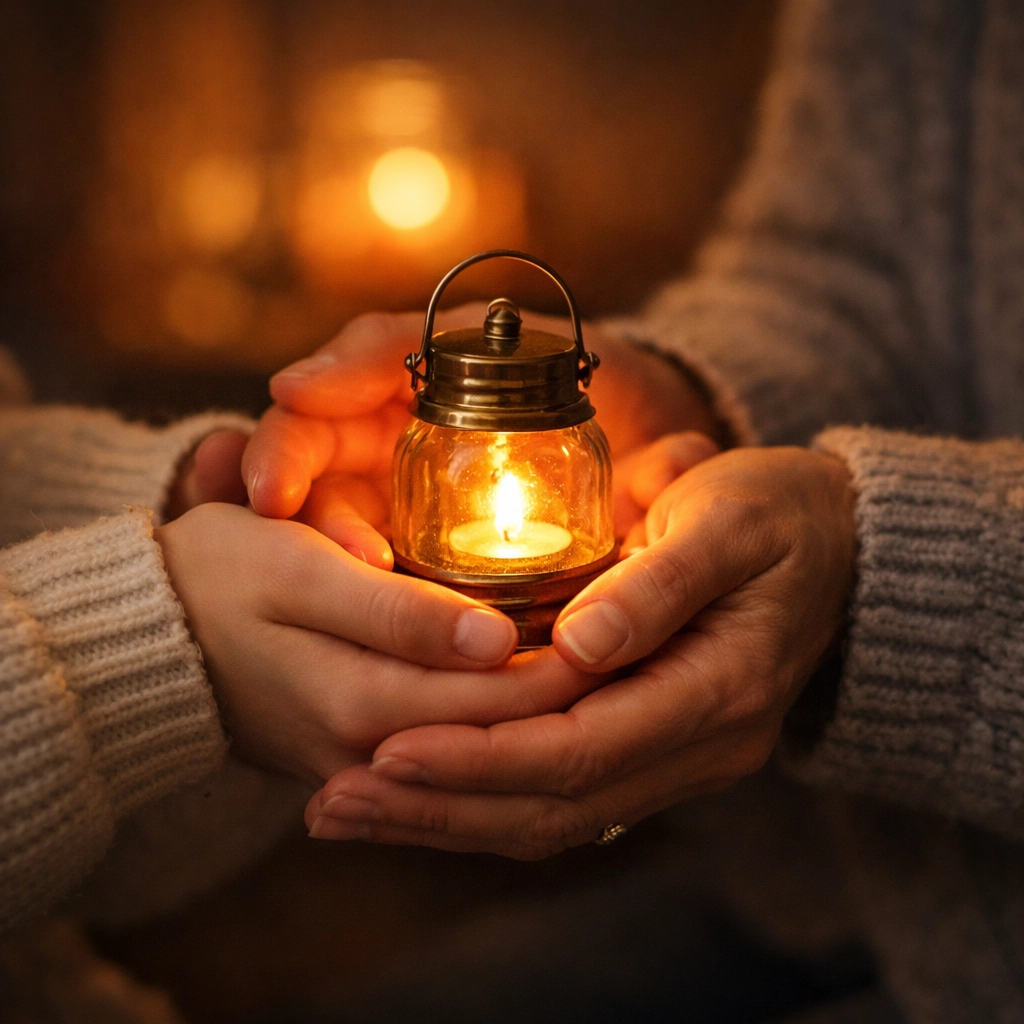
A close-up of two pairs of hands, one younger, one older, holding a small, glowing lantern together.
If you’re wondering how to choose a teen residential treatment center, or if you just need someone to listen to your story, we’re here. You don’t have to carry this heavy load by yourself anymore.
Let’s help her find her light again. Let’s walk this path together.
If you’re ready to take that next step or just want to chat about what’s possible for your daughter, please feel free to set an appointment or send us a referral. We’re ready when you are.